A robot delivery trial may fit in a press release. A robot-powered city needs years of public records, safety data, repair figures, and proof that people still want the service after the pilot ends. The global race matters only when cities publish enough detail for anyone to compare results.
- City plans need a clear job, not a robot count.
- Public safety data matters more than polished demonstrations.
- The winning system may be the one that keeps working after funding ends.
What a robot-powered city would actually contain
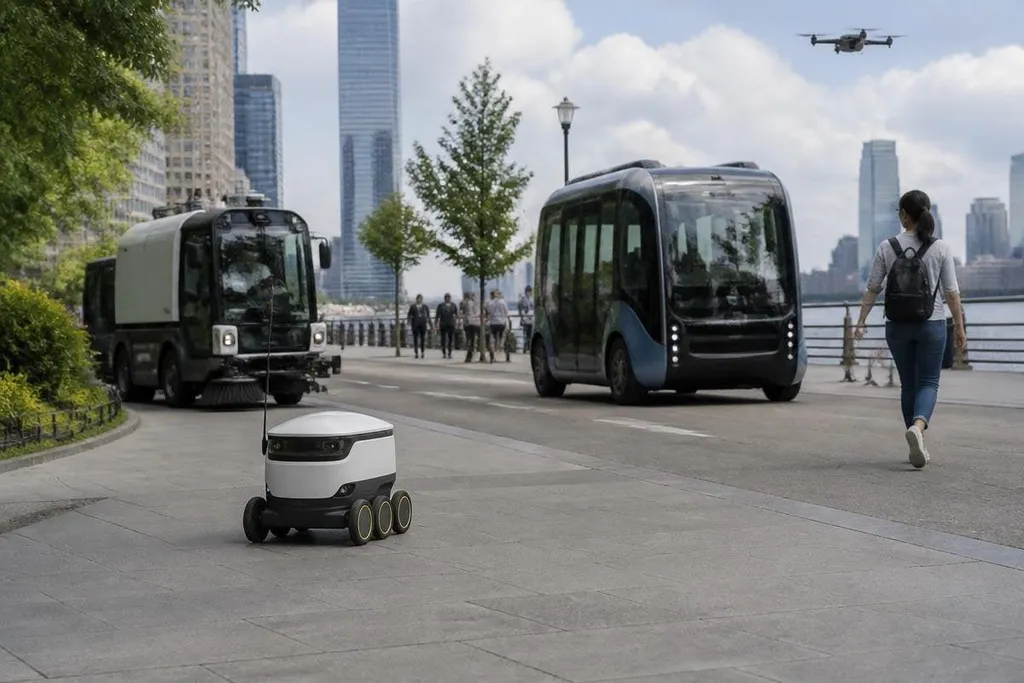
The phrase covers several different systems. One city may use autonomous buses, sidewalk delivery robots, robotic waste collection, inspection machines, or software that sends those systems where they need to go. Each task has a different safety risk and a different measure of success.
A delivery robot needs to avoid people, read crossings, reach the correct building, and handle a blocked path.
A sewer inspection robot needs cameras, a tether or radio link, and enough battery for the length of the pipe. Putting both under one label hides the work that decides whether either system belongs on public streets.
The first useful question is simple: what job does the robot perform, and what happens when it stops?
That second part matters because city services cannot treat a fault like a paused laboratory test. A blocked sidewalk robot may need a remote operator. A disabled inspection robot may leave a road or pipe closed until a crew reaches it. The plan needs that response written down before the machine enters service.
The race has no shared scorecard
Cities and companies can count robots, pilot sites, or announced contracts. Those figures say little about daily use. A better record would show how many hours the robots worked, how many trips ended without human help, how often people reported a problem, and how much staff time the system used.
Cost also needs a wider measure. The purchase price is one line. Charging equipment, mapping, insurance, remote supervision, software support, road changes, and repairs can decide whether a service survives after its trial budget runs out.
A city plan needs more than a robot count. Reports in robotics reporting fromRobot24.com can tie each claim to the machine, route, test date, and public result, giving residents something they can check before the plan moves ahead.
Publishing those details gives other cities something they can check. A city that publishes only a target date and a robot total gives the public a promise.
People are part of the system
Public robots share space with people who did not choose to join a test. That changes the design job. A machine must communicate where it is going, stop safely, protect personal data, and give people a clear way to report faults.
Workers also need a place in the plan. Remote supervision may reduce street work while adding control-room jobs. Maintenance still needs technicians who can replace parts, clean sensors, and recover a machine after a fault. Counting only the robot misses the people who keep it running.
The strongest plans will publish failure data as well as success data. That includes emergency stops, blocked routes, collisions, false alarms, repair time, and cases where a person had to take control. Without those figures, a smooth demonstration proves very little.
A practical test for city plans
Use this checklist before treating a city robotics program as ready for wider use:
- Name the task in one sentence.
- Ask who takes control after a fault.
- Check the trial area and the hours of operation.
- Find the repair, safety, and human-intervention records.
- Add staff, charging, software, insurance, and road costs.
- Set a public rule for stopping the service.
These points turn a broad claim into a plan that can be checked. They also help you compare a street robot with an inspection machine without pretending they face the same problem.
What happens next
I’d judge any city plan by its records after the launch event, not by its robot count. The useful question for the global race is who publishes enough evidence to let residents, workers, and other cities check the result.
Until that evidence appears, “robot-powered city” describes an ambition, not a finished service. The next serious milestone is a public report that shows what worked, what failed, and what the city changed afterward.